

When People Ask What Work I'm Most Proud Of, I Have to Say My Graduation Piece. From 17 Years Ago.
Which is a bit embarrassing honestly.
It's not about technical quality — looking back it's rough around the edges. But it was this small innocent idea that just flowed out of me without much further thought. A short film about the perception of a blind person. No second-guessing, no client notes, no overthinking. Just pure making.
It got a Vimeo Staff Pick. Got calls from people who have since been gloriously cancelled for saying absolutely bonkers things in public. Spoiler: those calls didn't lead anywhere except my ego.
Everything after that — directing music videos across several countries, commercials for big clients, VFX work for famous people — looked brilliant on paper. But nothing had that same feeling.
I studied Communication and Multimedia Design after film school rejected me at 16. Apparently "I've seen three Tarantino films" isn't a compelling application. Did my internship at a motion design studio in New York, spent five years in London, then scurried back to the Netherlands like a homesick hedgehog. Started out in motion design, but then something happened on set one day — this electric feeling of collaboration with actors and crew that I completely fell in love with. So I pivoted to directing.
And while my peers were directing feature films before 30 or landing international campaigns that paid enough to buy small islands, I started questioning what success actually meant. Was it about impressing people at parties, or creating work that didn't make me want to hide under my desk?
I'm not going to pretend I've figured it all out. If I had, I'd be on a yacht somewhere, not writing blog posts. But I did stumble across some things that helped me crawl out of the creative wasteland.
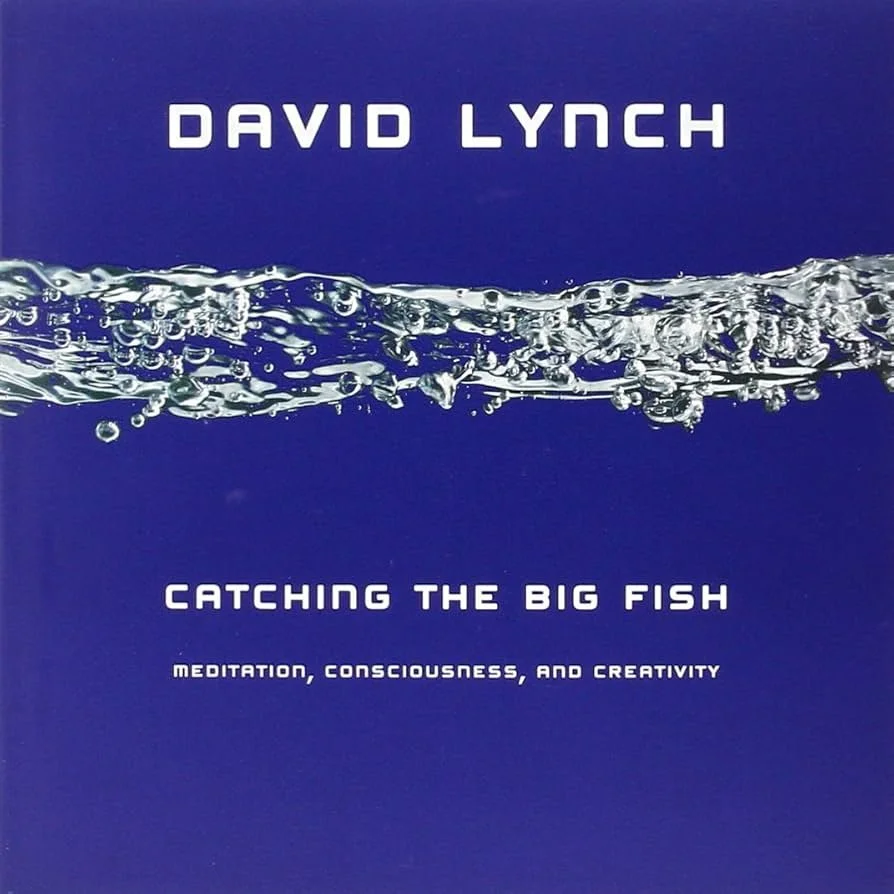
David Lynch — "Catching the Big Fish"
This started it all for me about 15 years ago. I was genuinely shocked to discover that the director behind those crazy, dreamy, violent films was someone who meditates twenty minutes in the morning and twenty minutes in the evening, all while drinking copious amounts of coffee and chain-smoking cigarettes. Creative enlightenment, but make it chaotic.
I started meditating after reading it and never looked back.
Lynch says ideas are like fish — if you want to catch little fish, you can stay in the shallow water, but if you want to catch the big fish, you've got to go deeper. Meanwhile I'd been fishing in a puddle in a car park for years, wondering why I kept catching old trainers and shopping trolleys.
Julia Cameron — "The Artist's Way"
This was the first time I read something that described going back to who you are creatively as a kind of recovery. Like it's the most normal thing in the world that you lost it somewhere along the way. That you're a "recovering artist." That language really resonated with me.
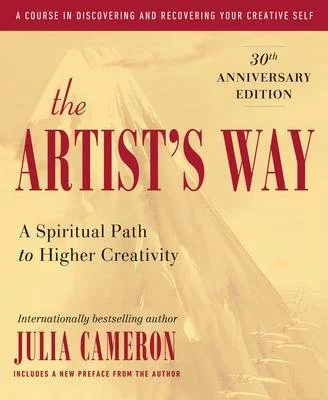
The book introduced me to morning pages — a daily brain dump that clears your mental RAM. Been doing them for 5 years now, most mornings. It's not about writing something nice or clever. It's an eject button for your mind. All the rubbish that's clogged up your brain overnight — worries, thoughts, to-dos — spills onto the page like a backed-up drain finally unclogged. I never sit there thinking about what to write. It flows out faster than my wallet empties at the pub on a Friday night.
I start each day clear-headed, with some gratitude written down, a few to-dos sorted, and sometimes a little sketch that usually looks like absolute bollocks. Doesn't matter.
The book also talks about "artist dates" — which sounds like speed dating for lonely painters but is actually about taking yourself out to refill your creative well. Sorry love, can't do dinner tonight — I'm dating myself at the modern art museum.
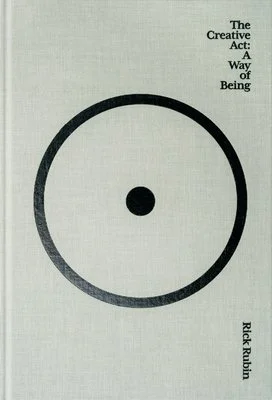
Rick Rubin — "The Creative Act: A Way of Being"
This one helped me see my work as a practice, where the end results are just fruit but the practice is the tree. It's about showing up every day even when there's no one asking for your skills that day. Or month. Or distressingly long period of unemployment.
Juno & Sensei
These books eventually pushed me to make something that actually mattered to me again. Juno & Sensei — a short film about mentorship in creative fields. Specifically those false mentors who guide you but would rather eat their own shoes than see you surpass them.
Half a year of my life. Perhaps I should have hired more VFX help, but I'm either a masochist or terminally stingy. Possibly both.
It started with an image of a man being catapulted off a building that popped into my head during a walk. Normal, healthy brain activity. I didn't overthink it or ask for endless feedback. I just made it.
It was also the perfect playground to test new tools — but with actual purpose behind them. Every shiny new thing needed a reason to be there beyond "it looks cool." Though "it looks cool" was definitely criteria number two.
After studying screenwriting for two years, I learned that storytelling isn't some mystical talent. Characters need wants and needs, conflict drives everything, and most importantly it all has to matter emotionally. All the technical wizardry is just expensive noise unless it's serving something authentic.
The Point
Creating Juno & Sensei taught me that technical mastery and artistic intuition aren't opposing forces. The technical skills create the playground where your creative madness can actually mean something, rather than just being that weird thing you do that makes your family concerned.
I'm still learning to see creativity as the practice, instead of just being a professional brief-follower. The secret is to always have personal stuff bubbling away — a feature film idea marinating in your brain, the next short film hiding in your drafts folder, a weird Cinema4D animation that only you think is hilarious.
Client work funds the passion. Passion fuels better client work. It's a beautiful, sleep-depriving cycle.
Your inner artist is probably still in there somewhere, hiding behind your Excel spreadsheets and client meeting notes. Probably eating biscuits and judging your life choices.
Time to coax the poor bugger out.
